

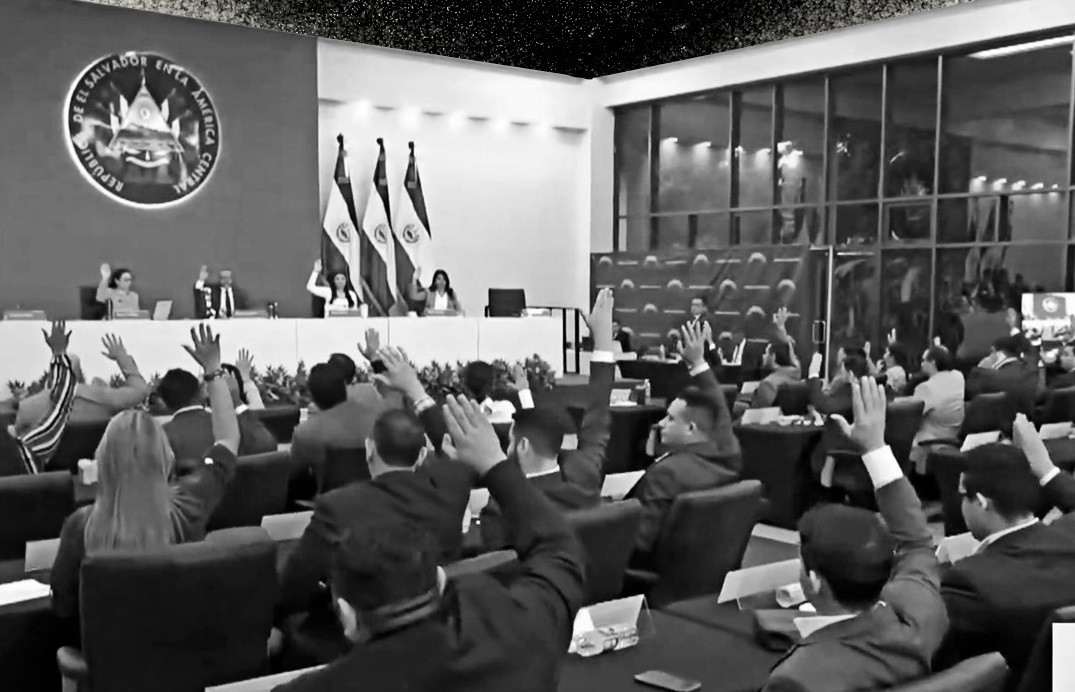

On Tuesday, May 20, 2025, the Legislative Assembly approved the controversial Foreign Agents Law, with the support of 57 votes from the ruling party and its allies. This legislation imposes a tax of with the support of 57 votes from the ruling party and its allies. This legislation imposes a 30% tax on all financial transactions, disbursements, transfers, or imports originating from abroad, regardless of whether they are donations, payments, or other types of transactions.
Various human rights organizations have expressed their concern, stating that this law aims to to financially stifle civil society organizations that are critical of the government. to financially stifle civil society organizations that are critical of the government and restrict their scope of action in the country.
Days earlier, on May 13, President Nayib Bukele publicly announced that he would introduce this initiative, accusing alleged “globalist ONG´S” and “self-proclaimed leftist” groups of manipulating humble people during a peaceful protest organized by the El Bosque Cooperative. This narrative seeks to justify legislation that, in practice, could severely limit the work of organizations that have historically supported the country’s most vulnerable communities.
One must ask: what will happen to the communities that have been supported by the work of ONG´S? It was a non-governmental organization that brought potable water to my community, managed the repair of our streets, improved conditions at our school, promoted sexual and reproductive health education, and provided support to people living with VIH. Meanwhile, municipalities and ministries have prioritized tourism projects aimed at benefiting certain economic sectors, ignoring the most urgent needs of the population..
Since the end of the armed conflict, civil society organizations have been a fundamental pillar in the country’s social development. Their work has responded to the real needs of communities, not to political or economic interests. Therefore, a legitimate question arises: what will the collected 30% tax be used for? The president mentioned it would be to "resolve" the problem of the El Bosque Cooperative, but the law does not specify how or where those funds will be used. Is this a social funding measure or a mechanism for political punishment?
The newspaper Alharaca has aptly pointed out: "Basically, it will be the government that decides which recipient organizations of international cooperation or solidarity will be subject to controls or a 30% tax, and which will not." This means that the organizations aligned with the government will enjoy privileges, while those that genuinely work in favor of the citizens could be penalized..
This law not only represents a threat to social and community work but also to democracy, citizen participation, and freedom of association. We demand that the interests of the people be prioritized over political interests, and that the work of those who have historically stood with the people not be restricted.